What is Polymarket? Complete Guide to Crypto Prediction Markets (2026)
Last Updated: January 2026
Disclaimer: This article is for educational purposes only. Prediction markets involve significant financial risk, including the potential loss of your entire investment. Never bet more than you can afford to lose. Gambling laws vary by jurisdiction—verify that prediction markets are legal in your location before participating.
Introduction: The Rise of Prediction Markets
Prediction markets have emerged from the shadows of niche cryptocurrency circles to become mainstream financial instruments, and no platform exemplifies this transformation more than Polymarket. As the world’s largest prediction market by trading volume, Polymarket captured global attention during the 2024 U.S. presidential election when it became the go-to source for real-time election probabilities—often proving more accurate than traditional polling.
The platform processed billions of dollars in trading volume during the election cycle, with mainstream media outlets from CNN to The New York Times citing Polymarket odds alongside conventional polls. This watershed moment demonstrated that prediction markets had evolved beyond speculative gambling into legitimate tools for forecasting real-world events.
If you’re wondering about Polymarket how to use it effectively, you’ve come to the right place. This comprehensive guide will walk you through everything from basic concepts to advanced trading strategies, helping you understand whether prediction markets deserve a place in your portfolio.
What is Polymarket?
Polymarket is a decentralized prediction market platform that allows users to trade on the outcomes of real-world events. Founded in 2020 by Shayne Coplan, the platform operates on the Polygon blockchain (a Layer 2 scaling solution for Ethereum) and uses USDC (USD Coin) as its primary currency for all transactions.
At its core, Polymarket functions as a peer-to-peer betting exchange. Unlike traditional sportsbooks where you bet against the house, Polymarket connects traders who hold opposing views about future events. This creates a dynamic marketplace where prices fluctuate based on collective sentiment and new information.
Key Features of Polymarket:
- Blockchain-Based: Built on Polygon for fast, low-cost transactions
- Stablecoin Settlement: All trades conducted in USDC, eliminating crypto price volatility concerns
- Peer-to-Peer Model: Trade directly with other users, not against the platform
- Non-Custodial Option: Connect your own wallet to maintain control of funds
- 24/7 Markets: Trade anytime, unlike traditional prediction markets
- Transparent Resolution: Market outcomes determined by verifiable real-world events
How Prediction Markets Work: Understanding the Basics
The fundamental principle behind prediction markets is elegantly simple: price equals probability. When you see a “YES” share trading at $0.18, the market collectively believes there’s an 18% chance that event will occur.
The Price-Probability Relationship
Every market on Polymarket has two sides: YES and NO. The prices of these shares always theoretically sum to $1.00 (though slight discrepancies can occur due to the bid-ask spread). Here’s how it works:
- YES at $0.18 = 18% implied probability the event happens
- NO at $0.82 = 82% implied probability the event doesn’t happen
Profit Calculation Example
Let’s say you believe a particular candidate has a better chance of winning an election than the market suggests. The YES shares are currently trading at $0.25 (25% implied probability).
Scenario: You buy 100 YES shares at $0.25 each
- Total Investment: $25.00
- If YES wins: You receive $1.00 per share = $100.00
- Gross Profit: $100.00 – $25.00 = $75.00
- After 4% fee on winnings: $75.00 – $3.00 = $72.00 net profit
- Return on Investment: 288%
If NO wins: Your shares become worthless, and you lose your entire $25.00 investment.
This asymmetric risk-reward profile is what makes prediction markets compelling—and dangerous. Low-probability events offer massive potential returns but carry high likelihood of total loss.
Types of Markets on Polymarket
Polymarket offers several market structures to accommodate different types of predictions:
1. Binary Markets (Yes/No)
The most common format, binary markets present a simple proposition with two possible outcomes. Examples include:
- “Will Bitcoin reach $150,000 by December 2026?”
- “Will Company X announce layoffs in Q1 2026?”
- “Will it snow in New York City on Christmas Day?”
2. Multi-Outcome Markets
These markets feature multiple possible outcomes where shares in all options must theoretically sum to $1.00. Common examples include:
- Election markets with multiple candidates
- “Which team will win the Super Bowl?”
- “Who will be named TIME Person of the Year?”
3. Scalar Markets (Ranges)
Scalar markets allow trading on numerical outcomes within defined ranges. Instead of binary yes/no, traders bet on where a value will fall. Examples include:
- “What will the Federal Reserve interest rate be in June 2026?”
- “How many seats will Party X win in the election?”
- “What will the unemployment rate be in Q4 2026?”
What Can You Bet On?
Polymarket hosts markets across diverse categories, reflecting the platform’s evolution from crypto-focused origins to broad mainstream appeal:
Politics
The platform’s most popular category, featuring elections, policy decisions, Supreme Court rulings, international relations, and government appointments. Political markets typically see the highest trading volumes and liquidity.
Cryptocurrency
Price predictions, ETF approvals, protocol upgrades, regulatory decisions, and adoption milestones for Bitcoin, Ethereum, and other digital assets.
Sports
Championship winners, MVP awards, trade rumors, and season outcomes across major leagues including NFL, NBA, MLB, soccer, and more.
Entertainment
Award show predictions (Oscars, Emmys, Grammys), box office performance, streaming numbers, celebrity news, and media industry developments.
Economics
Federal Reserve decisions, inflation data, GDP growth, employment figures, corporate earnings, and macroeconomic indicators.
Weather and Science
Climate events, hurricane predictions, temperature records, space missions, and scientific discoveries.
Polymarket How to Use: Step-by-Step Guide
Ready to start trading? Here’s a comprehensive walkthrough of Polymarket how to use the platform from account creation to your first trade:
Step 1: Connect a Cryptocurrency Wallet
Polymarket requires a Web3 wallet to interact with the platform. The most popular options include:
- MetaMask: The most widely-used browser extension wallet
- Coinbase Wallet: User-friendly option integrated with Coinbase exchange
- WalletConnect: Protocol supporting hundreds of mobile wallets
- Rainbow: Popular mobile-first Ethereum wallet
Visit polymarket.com and click “Connect Wallet” in the top right corner. Select your wallet provider and approve the connection request.
Step 2: Acquire USDC on Polygon Network
Polymarket operates on the Polygon network and exclusively uses USDC. You have several options to obtain USDC on Polygon:
- Direct Purchase: Buy USDC directly through Polymarket’s onramp partners
- Bridge from Ethereum: Use the Polygon Bridge to transfer USDC from Ethereum mainnet
- Centralized Exchanges: Withdraw USDC from exchanges that support Polygon (ensure you select the correct network)
- DEX Swap: Swap other Polygon tokens for USDC on decentralized exchanges like Uniswap or QuickSwap
Step 3: Deposit Funds
Once your wallet contains USDC on Polygon, deposit funds into your Polymarket account. The platform will prompt you to approve the USDC contract (a one-time transaction) and then deposit your desired amount. There are no deposit fees charged by Polymarket.
Step 4: Browse and Research Markets
Explore available markets using the category filters or search function. Before trading, thoroughly research:
- Market resolution criteria (how the outcome is determined)
- Resolution source (which authority or data source decides the outcome)
- Resolution date (when the market closes)
- Current trading volume and liquidity
- Historical price movements
Step 5: Place Your First Trade
Select a market and choose your position (YES or NO). You can either:
- Market Order: Buy immediately at the current best available price
- Limit Order: Set your desired price and wait for the market to reach it
Enter the number of shares or dollar amount, review the transaction details, and confirm your trade.
Step 6: Monitor and Trade Your Position
Track your positions in the Portfolio section. Remember, you don’t have to hold until resolution—you can sell your shares at any time if the price moves favorably or if you want to cut losses.
Step 7: Withdraw Funds
To withdraw, navigate to your account settings and select “Withdraw.” Your USDC will be sent to your connected wallet on Polygon. From there, you can bridge to other networks or transfer to exchanges as needed. Polymarket charges no withdrawal fees.
Trading Strategies for Prediction Markets
Successful prediction market trading requires more than luck. Consider these approaches:
Research-Based Trading
The most sustainable strategy involves developing genuine informational advantages. This might mean:
- Deep expertise in specific domains (politics, sports, crypto)
- Access to unique data sources or analytical tools
- Superior interpretation of publicly available information
- Faster reaction to breaking news
Arbitrage Opportunities
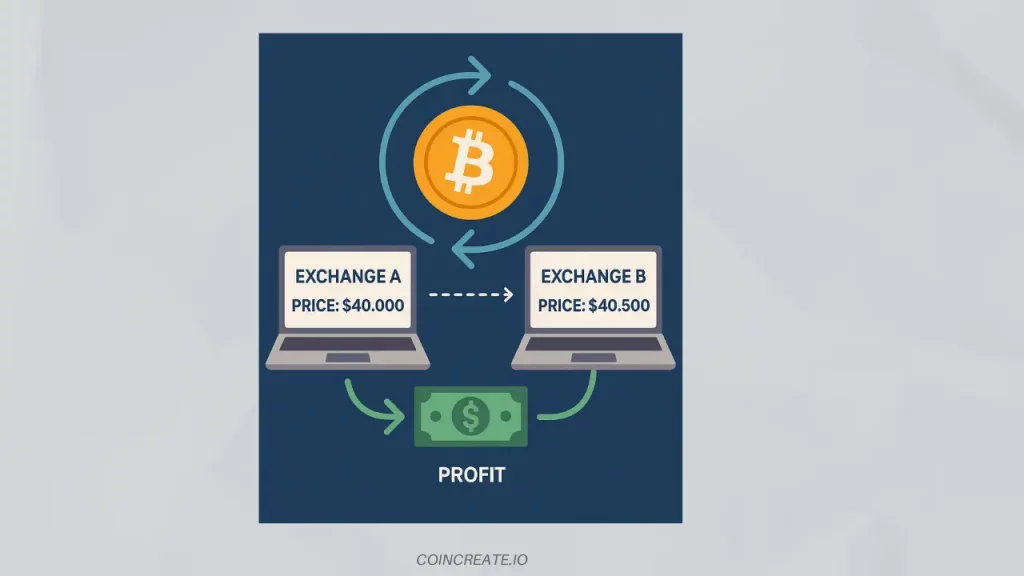
Occasionally, pricing inefficiencies emerge between related markets or across platforms. Arbitrage traders profit by simultaneously taking opposing positions that guarantee returns regardless of outcome. These opportunities are rare and typically require significant capital and speed to exploit.
Hedging Real-World Exposure
Prediction markets can serve as hedging instruments. For example:
- A crypto holder might bet against Bitcoin ETF approval to offset potential losses
- A business owner might hedge against regulatory changes affecting their industry
- An investor might offset election-related portfolio risk
Fees and Costs
Understanding Polymarket’s fee structure is essential for calculating potential returns:
| Fee Type | Amount | Notes |
|---|---|---|
| Transaction Fee | 4% | Applied to net winnings only |
| Deposit Fee | 0% | No fees from Polymarket |
| Withdrawal Fee | 0% | No fees from Polymarket |
| Network Gas Fees | Variable | Polygon fees are minimal (typically under $0.01) |
The 4% fee applies only to profits, not total position value. If you buy at $0.30 and win, you pay 4% of the $0.70 profit, not the full $1.00 payout.
Regional Availability
Polymarket’s accessibility has evolved significantly since its founding:
United States
After operating in a regulatory gray area and facing CFTC enforcement action in 2022, Polymarket restored access for U.S. users in 2025 following regulatory clarity and compliance improvements. American traders can now legally participate, though certain market categories may have restrictions.
Restricted Countries
Polymarket remains unavailable in several jurisdictions due to regulatory constraints, including:
- Belarus
- Cuba
- Iran
- North Korea
- Russia
- Syria
- Other OFAC-sanctioned regions
Always verify current restrictions in your jurisdiction before participating, as regulatory landscapes evolve continuously.
Risks and Considerations
Warning: Prediction markets carry substantial risks. Consider the following carefully before participating:
Total Loss of Investment
Unlike traditional investments, prediction market positions can become completely worthless. If your prediction is wrong, you lose 100% of your stake. There are no dividends, no residual value, and no recovery mechanism.
Market Manipulation
While prediction markets theoretically aggregate information efficiently, they’re not immune to manipulation. Well-funded actors can temporarily move prices to create misleading signals or profit from panic selling. Always be skeptical of sudden, unexplained price movements.
Regulatory Uncertainty
Despite improved clarity in some jurisdictions, prediction markets occupy evolving regulatory territory. Rules could change, potentially affecting market operation, fund accessibility, or legal status in your location.
Liquidity Risk
Less popular markets may have thin order books, making it difficult to enter or exit positions at favorable prices. Always check market depth before committing significant capital.
Smart Contract Risk
As a blockchain-based platform, Polymarket relies on smart contracts that could theoretically contain vulnerabilities. While the platform has undergone security audits, no system is completely immune to technical failures.
Platform Comparison: Polymarket vs Competitors
| Feature | Polymarket | Kalshi | Augur |
|---|---|---|---|
| Type | Crypto-based | CFTC-regulated | Decentralized |
| Currency | USDC (Polygon) | USD (Bank transfer) | ETH/DAI |
| Market Share (2026) | ~30% | ~66% | ~4% |
| US Availability | Yes (since 2025) | Yes | Limited |
| KYC Required | Varies by region | Full KYC | None |
| Fee Structure | 4% on winnings | Variable by market | ~1% + gas |
| Market Variety | Extensive | Moderate (regulated) | User-created |
| Minimum Trade | ~$1 | $1 | Variable |
| Settlement Speed | Instant (blockchain) | 1-3 business days | Instant (blockchain) |
Note: Kalshi’s 66% market share reflects its growth following full CFTC approval and banking integrations, making it the dominant U.S. platform for retail traders seeking regulatory protection.
Frequently Asked Questions (FAQ)
Is Polymarket legal?
Polymarket’s legality depends on your jurisdiction. The platform restored U.S. access in 2025 after regulatory developments. However, it remains prohibited in sanctioned countries and regions with explicit prediction market bans. Always verify local laws before participating.
How old do you have to be to use Polymarket?
Users must be at least 18 years old (or the age of majority in their jurisdiction) to use Polymarket. The platform may require age verification depending on your location.
Can you make money on Polymarket?
Yes, profitable trading is possible if your predictions prove correct more often than the market expects. However, studies suggest most retail prediction market traders lose money over time. Success requires genuine informational advantages or analytical skills superior to the collective market.
What happens if a market is unclear or disputed?
Polymarket uses designated resolution sources specified in each market’s rules. If disputes arise, the platform has resolution procedures involving community input and, in some cases, oracle systems. Markets may occasionally be voided if resolution becomes impossible.
How do I pay taxes on Polymarket winnings?
Tax treatment varies by jurisdiction. In the United States, prediction market winnings are generally taxable as ordinary income or gambling income. Consult a qualified tax professional familiar with cryptocurrency and prediction market taxation in your jurisdiction.
Can I use Polymarket on mobile?
Yes, Polymarket offers a mobile-responsive web interface accessible through smartphone browsers. You can connect mobile wallets like Rainbow, Coinbase Wallet, or MetaMask Mobile for seamless mobile trading.
What’s the minimum amount needed to start?
There’s no official minimum, but practical minimums around $5-10 USDC are recommended to account for share prices and ensure meaningful position sizes. Remember to factor in any costs associated with acquiring USDC on Polygon.
How quickly can I withdraw my funds?
Withdrawals to your connected wallet are processed instantly on the Polygon blockchain. From there, transfer times to exchanges or other networks depend on the specific services you use.
Conclusion
Polymarket has established itself as the world’s largest prediction market, transforming from a cryptocurrency niche product into a mainstream forecasting tool. The platform’s combination of blockchain technology, stablecoin settlement, and diverse market offerings provides unique opportunities for informed traders.
Understanding Polymarket how to use it effectively requires grasping the price-probability relationship, developing research-based trading strategies, and maintaining rigorous risk management. While the potential for significant profits exists, so does the certainty of total loss for incorrect predictions.
As prediction markets continue gaining mainstream acceptance and regulatory clarity, platforms like Polymarket will likely play increasingly important roles in information aggregation and forecasting. Whether you’re interested in expressing political views, hedging business risks, or simply testing your predictive abilities, prediction markets offer a unique intersection of finance, probability, and real-world events.
Final Reminder: Never invest more than you can afford to lose completely. Prediction markets are high-risk instruments that can result in 100% loss of your position. Always conduct thorough research, understand market resolution criteria, and consider consulting financial and legal professionals before participating.
This article is for informational purposes only and does not constitute financial, investment, or legal advice. The author and publisher are not responsible for any losses incurred through prediction market trading.