You tried to swap $100 of tokens and the fee was $50. Welcome to Ethereum gas fees—the necessary evil of blockchain transactions. Gas fees frustrate newcomers and cost experienced traders thousands annually. This comprehensive guide explains what gas fees are, why they vary so dramatically, how they’re calculated, and practical strategies to minimize them in 2026.
What Are Gas Fees?
Gas fees are transaction fees paid to validators (or miners, on proof-of-work chains) who process and secure blockchain transactions. Every operation on a blockchain—whether transferring tokens, swapping on a DEX, or minting an NFT—requires computational work. Gas fees compensate for that work and serve as a spam prevention mechanism.
The term “gas” originated with Ethereum, where it measures computational effort required to execute operations. Just as a car needs gas to run, Ethereum transactions need gas to execute. Other blockchains have similar mechanisms with different names (Solana calls them “lamports,” Bitcoin calls them “sats/vbyte”).
Why Gas Fees Exist
Gas fees serve three critical functions:
- Validator compensation: Incentivizes network participants to process and validate transactions
- Spam prevention: Makes denial-of-service attacks expensive
- Resource allocation: During congestion, higher fees prioritize important transactions
Without gas fees, anyone could flood the network with unlimited transactions, grinding it to a halt.
How Gas Fees Work on Ethereum
Understanding Ethereum gas requires knowing three components: gas units, gas price, and the base fee/priority fee split introduced by EIP-1559.
The Gas Formula
Transaction Cost = Gas Units × (Base Fee + Priority Fee)
| Component | Description | Who Controls It |
|---|---|---|
| Gas Units | Amount of computation required | Determined by transaction type |
| Base Fee | Minimum price per gas unit | Protocol (adjusts automatically) |
| Priority Fee (Tip) | Extra payment to validators | User-controlled |
| Gwei | Unit of measurement (0.000000001 ETH) | N/A |
Gas Units by Transaction Type
Different operations require different amounts of computational work:
| Transaction Type | Typical Gas Units | Why |
|---|---|---|
| ETH transfer | 21,000 | Simple value transfer, minimal computation |
| ERC-20 transfer | 45,000-65,000 | Requires contract interaction |
| ERC-20 approval | 45,000 | Grants spending permission |
| Uniswap swap | 150,000-300,000 | Complex contract logic, price calculations |
| NFT mint | 100,000-250,000 | Creates new token, stores metadata |
| NFT transfer | 50,000-80,000 | Updates ownership records |
| Aave deposit | 200,000-400,000 | Multiple contract interactions |
Example Calculation
Let’s calculate the cost of a simple ETH transfer:
- Gas units required: 21,000
- Base fee: 25 Gwei
- Priority fee: 2 Gwei
- Total gas price: 27 Gwei
- Gas cost: 21,000 × 27 = 567,000 Gwei
- In ETH: 0.000567 ETH
- At $3,500/ETH: $1.98
Now compare to a Uniswap swap:
- Gas units required: 200,000
- Same gas price: 27 Gwei
- Gas cost: 200,000 × 27 = 5,400,000 Gwei
- In ETH: 0.0054 ETH
- At $3,500/ETH: $18.90
This explains why complex DeFi operations cost significantly more than simple transfers.
EIP-1559: How Ethereum’s Fee Market Works
Since August 2021, Ethereum uses EIP-1559, which fundamentally changed gas fee mechanics:
- Base fee: Algorithmically determined based on network demand. Increases when blocks are more than 50% full, decreases when less than 50% full. This fee is burned (destroyed), not paid to validators.
- Priority fee (tip): Optional payment directly to validators. Higher tips get faster inclusion during congestion.
- Max fee: The maximum you’re willing to pay. Unused gas is refunded.
Key benefit: More predictable fees. The base fee adjusts gradually, and you can set a max fee knowing you’ll get a refund if the actual fee is lower.
What Affects Gas Fees?
Network Congestion
The primary driver of gas prices is demand for block space. Ethereum blocks have limited capacity. When demand exceeds supply, prices rise.
Congestion triggers:
- Popular NFT drops (e.g., Yuga Labs mints have spiked fees to 500+ Gwei)
- Token launches and airdrops
- Market volatility (everyone trading simultaneously)
- New DeFi opportunities (yield farming rushes)
- Meme coin trading frenzies
Transaction Complexity
As shown earlier, complex smart contract interactions require more gas. A simple transfer will always cost less than a multi-hop swap through several liquidity pools.
ETH Price
Gas is denominated in ETH. Even if Gwei prices stay constant, higher ETH prices mean higher USD costs:
- At $2,000 ETH: 30 Gwei swap = ~$12
- At $3,500 ETH: 30 Gwei swap = ~$21
- At $5,000 ETH: 30 Gwei swap = ~$30
This relationship means bull markets often feel more expensive to transact in, even without increased congestion.
Time of Day and Week
Gas prices follow usage patterns:
- Highest: US market hours (9 AM – 5 PM EST), especially Tuesday-Thursday
- Moderate: European hours
- Lowest: Asian night hours, weekends (especially Sunday morning US time)
Gas Fees Across Different Networks
Not all blockchains have expensive gas fees. Here’s how major networks compare:
| Network | Type | Avg Swap Fee | Speed | Security Model |
|---|---|---|---|---|
| Ethereum L1 | Layer 1 | $5-100+ | 12 sec | Highest security |
| Arbitrum | L2 Rollup | $0.10-0.50 | 2 sec | Inherits Ethereum |
| Optimism | L2 Rollup | $0.10-0.50 | 2 sec | Inherits Ethereum |
| Base | L2 Rollup | $0.01-0.10 | 2 sec | Inherits Ethereum |
| Polygon | Sidechain | $0.01-0.05 | 2 sec | Own security |
| Solana | Layer 1 | $0.001 | 400ms | Own security |
| BNB Chain | Layer 1 | $0.10-0.30 | 3 sec | Own security |
Key insight: Layer 2 rollups (Arbitrum, Optimism, Base) offer 90-99% fee reductions while inheriting Ethereum’s security. For most users in 2026, there’s little reason to pay high L1 fees for routine transactions.
How to Check Current Gas Fees
Recommended Tools
| Tool | URL | Best For |
|---|---|---|
| Etherscan Gas Tracker | etherscan.io/gastracker | Real-time ETH gas, historical data |
| L2Fees.info | l2fees.info | Compare costs across L2s |
| Blocknative | blocknative.com | Gas estimator, transaction preview |
| ultrasound.money | ultrasound.money | Fee burning statistics |
Interpreting Gas Prices (Gwei)
- Low (10-20 Gwei): Off-peak, weekends. Great time for non-urgent transactions.
- Average (25-50 Gwei): Normal network activity. Acceptable for most transactions.
- High (50-100 Gwei): Elevated demand. Consider waiting if not urgent.
- Very High (100-200 Gwei): Significant congestion. Only proceed if necessary.
- Extreme (200+ Gwei): Major event or attack. Wait unless absolutely critical.
Strategies to Reduce Gas Fees
1. Time Your Transactions
Gas prices can vary 50-80% throughout a day. For non-urgent transactions:
- Check gas prices before transacting
- Set alerts for low gas periods
- Weekend mornings (US time) typically offer lowest fees
- Avoid transacting during major NFT drops or market volatility
2. Use Layer 2 Networks
The most effective strategy for regular users. Bridge your assets to Arbitrum, Optimism, or Base:
- Same Ethereum security guarantees
- 90-99% lower fees
- Faster transactions
- Growing ecosystem of apps
How to bridge: Use native bridges (bridge.arbitrum.io, app.optimism.io/bridge) or aggregators like Jumper.exchange. Start with small amounts to test.
3. Use Alternative Layer 1s
For certain use cases, other L1s make sense:
- Solana: Best for high-frequency trading, NFT minting, meme coins
- BNB Chain: Binance ecosystem, gaming
Tradeoff: You’re relying on that chain’s security model rather than Ethereum’s.
4. Set Custom Gas Prices
Most wallets let you customize gas settings:
- Slow: Lower priority fee, longer wait time (minutes to hours)
- Average: Balanced speed and cost
- Fast: Higher priority fee, near-instant inclusion
For non-urgent transactions, “slow” can save 20-40% on fees.
5. Batch Transactions
Some protocols allow combining multiple operations:
- Claim and restake rewards in one transaction
- Multiple token approvals combined
- Batch NFT operations
This amortizes the base transaction cost across multiple operations.
6. Use Gas-Optimized Protocols
Some DeFi protocols are more gas-efficient than others. Aggregators like 1inch and ParaSwap optimize transaction routing to minimize gas usage.
7. Revoke Unnecessary Approvals
Old token approvals don’t cost ongoing gas, but revoking them during low-fee periods improves security. Use revoke.cash to manage approvals.
Failed Transactions and Gas
Do You Pay Gas on Failed Transactions?
Yes—partial or full gas is consumed because computation was attempted. The blockchain still processed your transaction; it just failed during execution. Common causes:
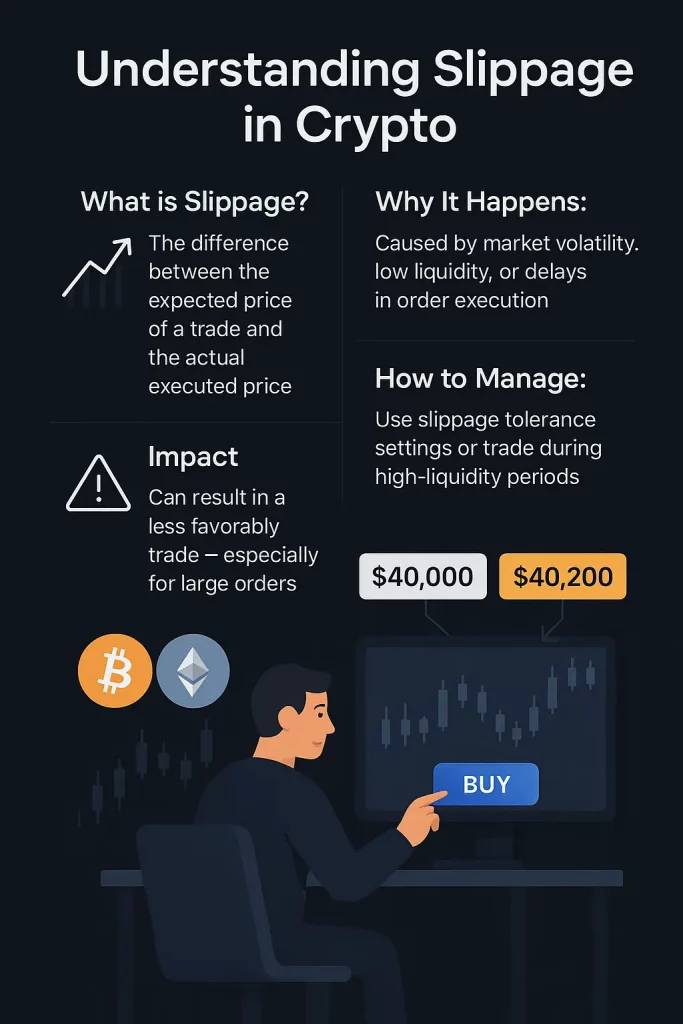
- Slippage tolerance too low: Price moved beyond your limit
- Insufficient gas limit: Transaction ran out of gas mid-execution
- Contract error: Logic conditions not met
- Frontrunning: Bot executed before you, invalidating your transaction
How to Avoid Failed Transactions
- Set appropriate slippage tolerance (usually 0.5-1% for stablecoins, 1-3% for volatile pairs)
- Don’t set gas limit below the wallet’s estimate
- Ensure sufficient balance for both the trade and the gas fee
- Use DEXs with MEV protection to prevent frontrunning
- Avoid transacting during extreme volatility
The Future of Gas Fees
EIP-4844 (Proto-Danksharding)
Implemented in March 2024, EIP-4844 introduced “blob” transactions that dramatically reduced L2 fees. Results:
- L2 fees dropped 90-95%
- Arbitrum/Optimism swaps: $0.50 → $0.05
- Base transactions often under $0.01
Full Danksharding (Future)
The complete danksharding upgrade will further reduce L2 data costs by orders of magnitude. Target: sub-penny L2 transactions.
Ethereum’s Scaling Roadmap
Ethereum’s strategy is clear: L1 remains expensive but ultra-secure. L2s handle everyday transactions at minimal cost. The goal isn’t cheap L1 fees—it’s cheap L2 fees with L1 security.
Frequently Asked Questions
Why are Ethereum fees so high?
Limited block space combined with high demand equals expensive fees. It’s by design—high fees indicate strong demand for block space and provide robust security. For everyday transactions, use Layer 2 solutions which offer 99%+ fee reductions while inheriting Ethereum’s security.
Can I get a gas refund if my transaction fails?
No. Gas compensates validators for the computation they performed, regardless of whether your transaction succeeded. Unused gas above the minimum is returned, but the gas consumed during the failed execution is lost.
Why did my transaction fail despite paying gas?
Common causes include: slippage exceeded (price moved too much), insufficient token balance, contract conditions not met (deadline expired, liquidity changed), or gas limit too low. Check the transaction on Etherscan for the specific error message.
Will gas fees ever go away?
No. Fees are fundamental to blockchain security and economics. They prevent spam, compensate validators, and allocate scarce block space. However, Layer 2 solutions make fees negligible for most users—often under a penny per transaction.
What’s the cheapest time to transact on Ethereum?
Generally weekends (especially Sunday) and early morning US time. Gas prices can be 50-80% lower during off-peak hours. Check etherscan.io/gastracker for current and historical patterns.
Should I use L2s or alternative L1s for cheaper fees?
For most Ethereum-ecosystem activities, Layer 2s (Arbitrum, Base, Optimism) are recommended because they inherit Ethereum’s security. Alternative L1s (Solana, BNB Chain) make sense for activities specific to those ecosystems but come with different security tradeoffs.
Conclusion
Gas fees are the cost of blockchain security and decentralization. While Ethereum L1 fees can be frustrating, understanding how they work empowers you to minimize costs. The most important strategies: use Layer 2 networks for routine transactions, time non-urgent transactions during low-fee periods, and match your network choice to your use case.
For most users in 2026, there’s no reason to pay high Ethereum L1 fees for everyday swaps and transfers. Bridge to an L2, enjoy sub-dollar fees, and reserve L1 for high-value transactions where maximum security matters.
Related: What Are Layer 2 Sequencers? | Understanding Slippage | Solana Ecosystem Guide